Short-Circuit Earthing Set with Earth Rod, 0.4–500 kV
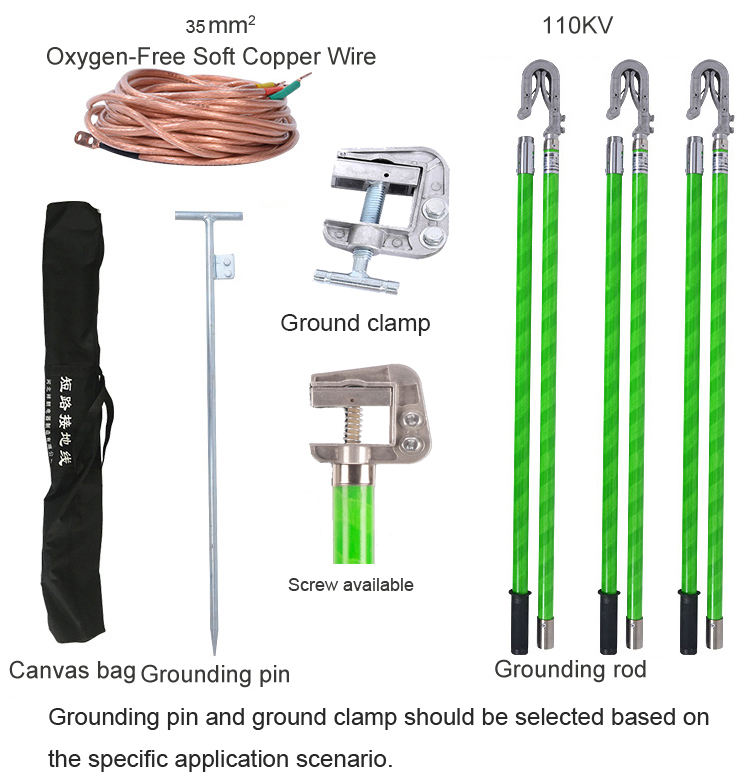
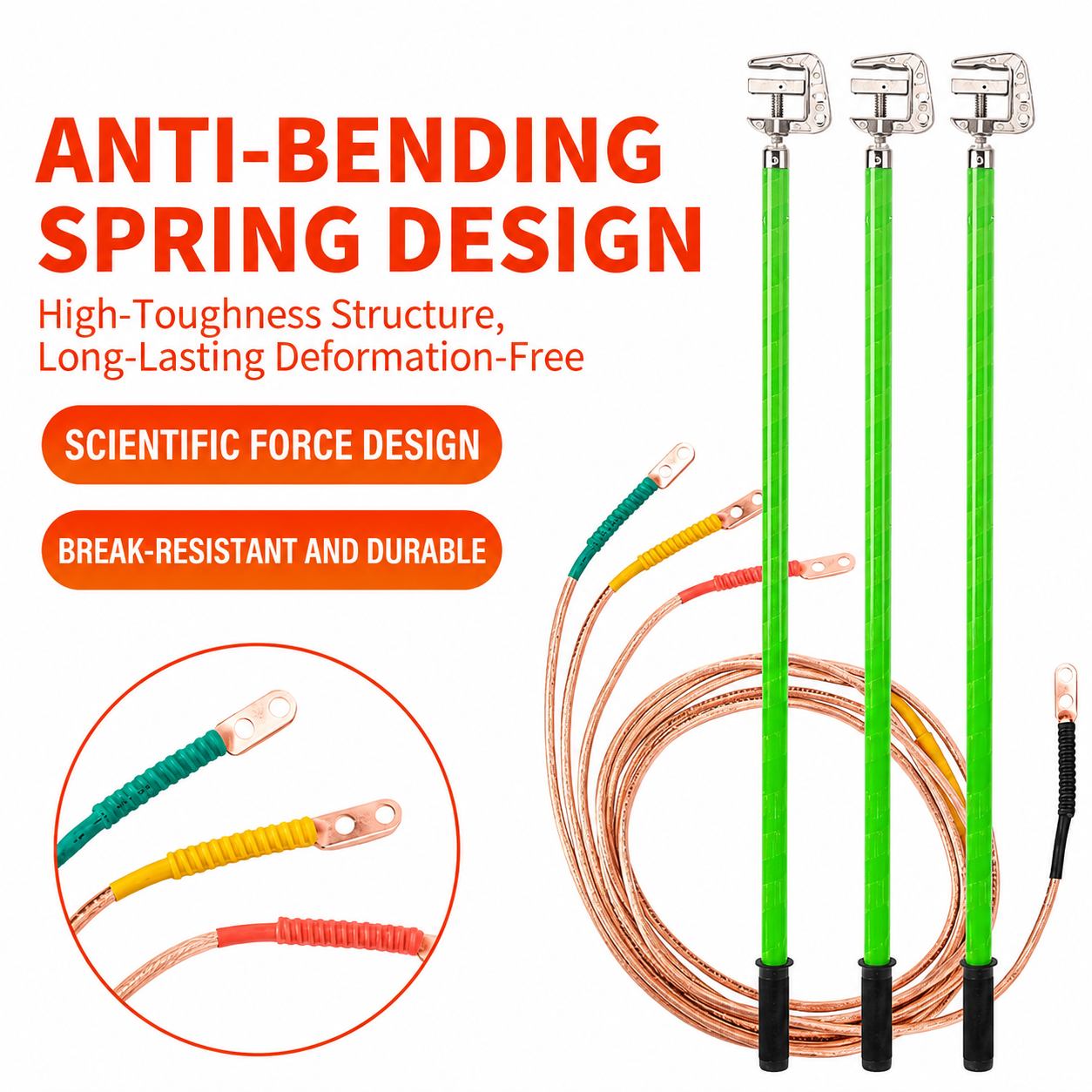
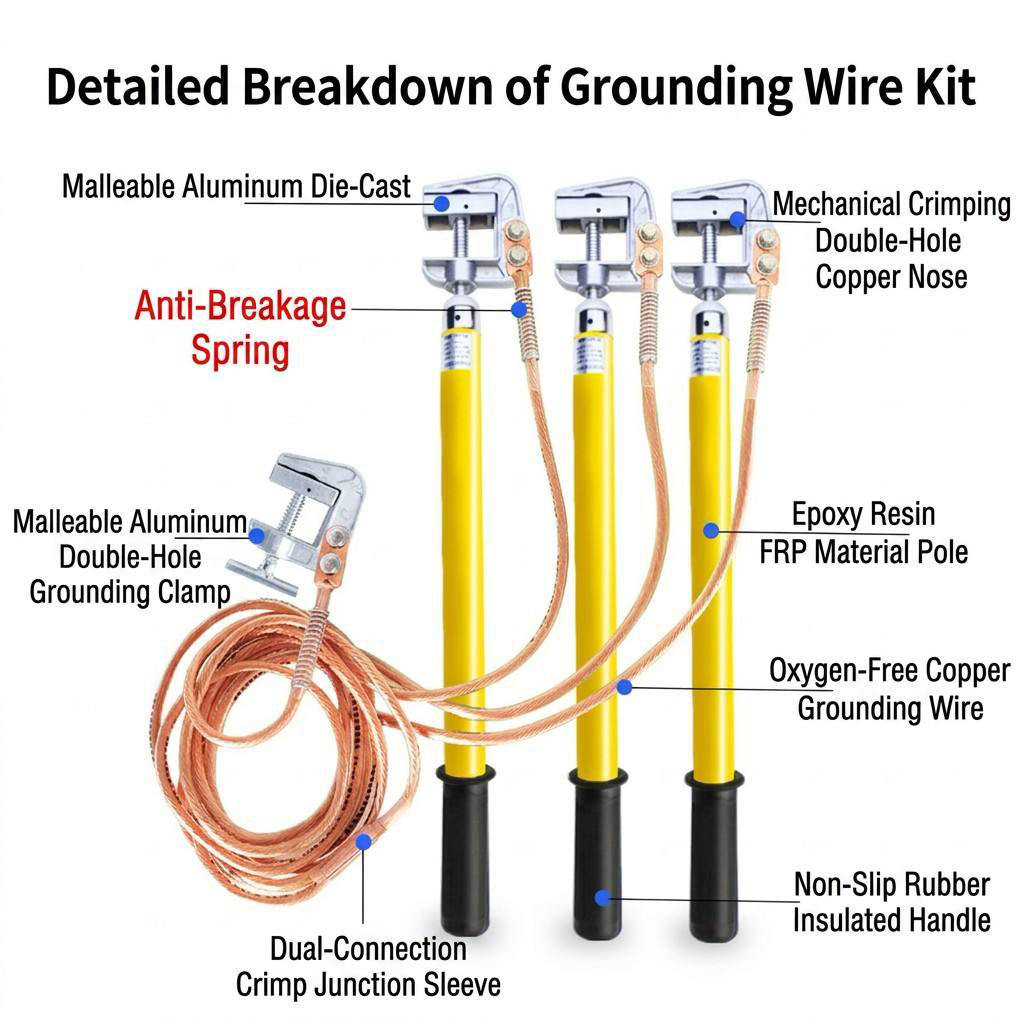
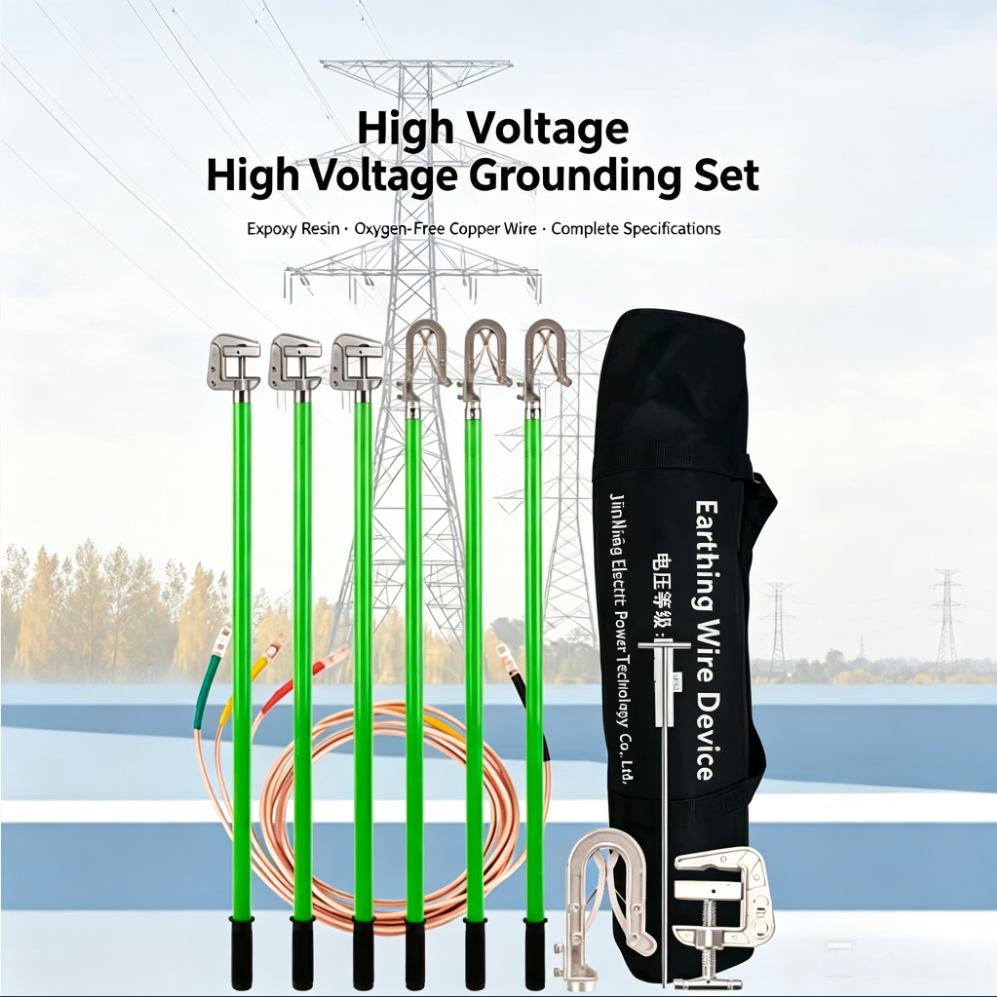
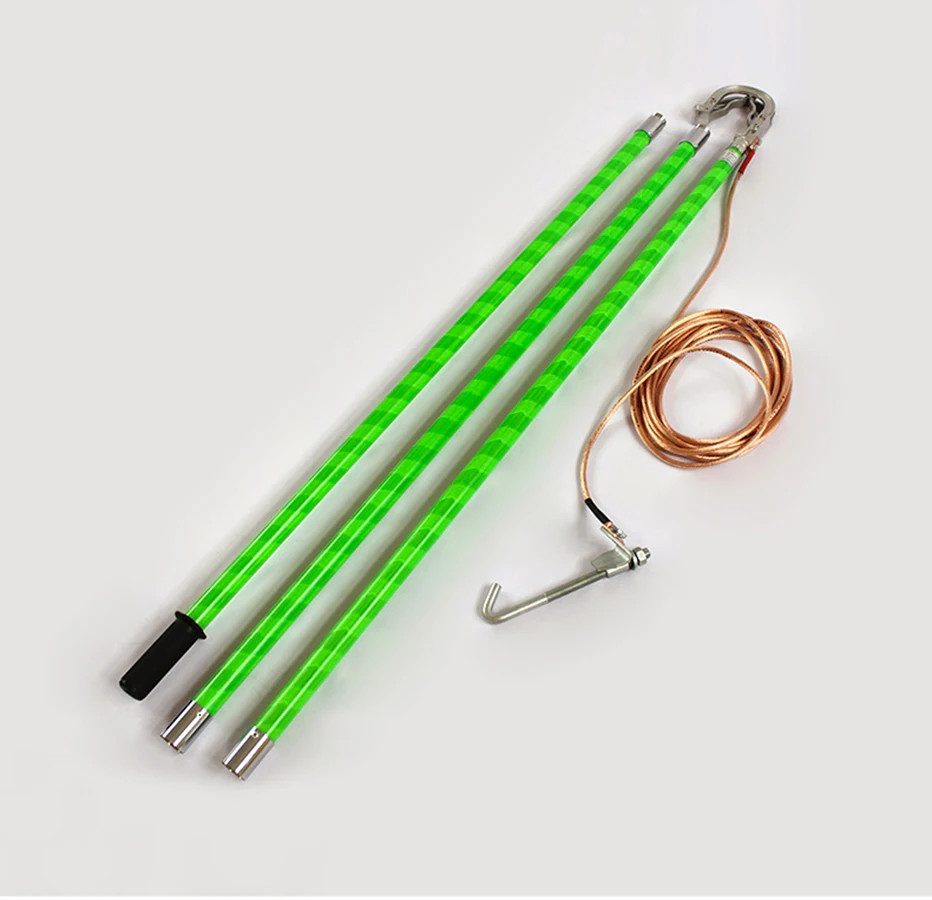
Three-phase portable short-circuit earthing set with epoxy operating rod, oxygen-free copper leads in 16 / 25 / 35 / 50 mm² and a screw-type aluminium clamp head, built for 0.4 kV to 500 kV.
A portable earthing set protects the person, not the equipment. We build them to IEC 61230 across the range we publish — 0.4 kV to 500 kV — and quote them against the point of work: the fault level, the conductor geometry and the height the operator has to reach.
Before work starts on a de-energised circuit, the conductor has to be connected to earth at the worksite and short-circuited between phases. That is what IEC 61230 covers: portable equipment for earthing, or earthing and short-circuiting, of isolated or de-energised installations and networks — overhead or underground, a.c. or d.c., at low or high voltage.
The standard is explicit about what the equipment is rated by, and it is worth reading before the enquiry is written. Performance is based on the electro-dynamic and electro-thermal effects acting during a short-circuit, and the withstand capability is expressed as rated values of current, time and peak factor. IEC 61230 gives no rated voltage: the installation voltage enters through the insulating component and the geometrical dimensions of the equipment.
So a set is quoted from the prospective fault current at the point of work, the clearing time of the upstream protection and the conductor size — not from the system voltage alone. A set that is the wrong cross-section for the fault level will pass a visual check and still fail at the moment it is called upon.
The current-carrying medium is part of the standard too: the equipment it covers uses copper cables, copper bars or aluminium bars, and the flexible cables for it are specified separately under IEC 61138. The second edition, published in 2008, extended the use of aluminium to all conductive parts and brought d.c. installations into scope.
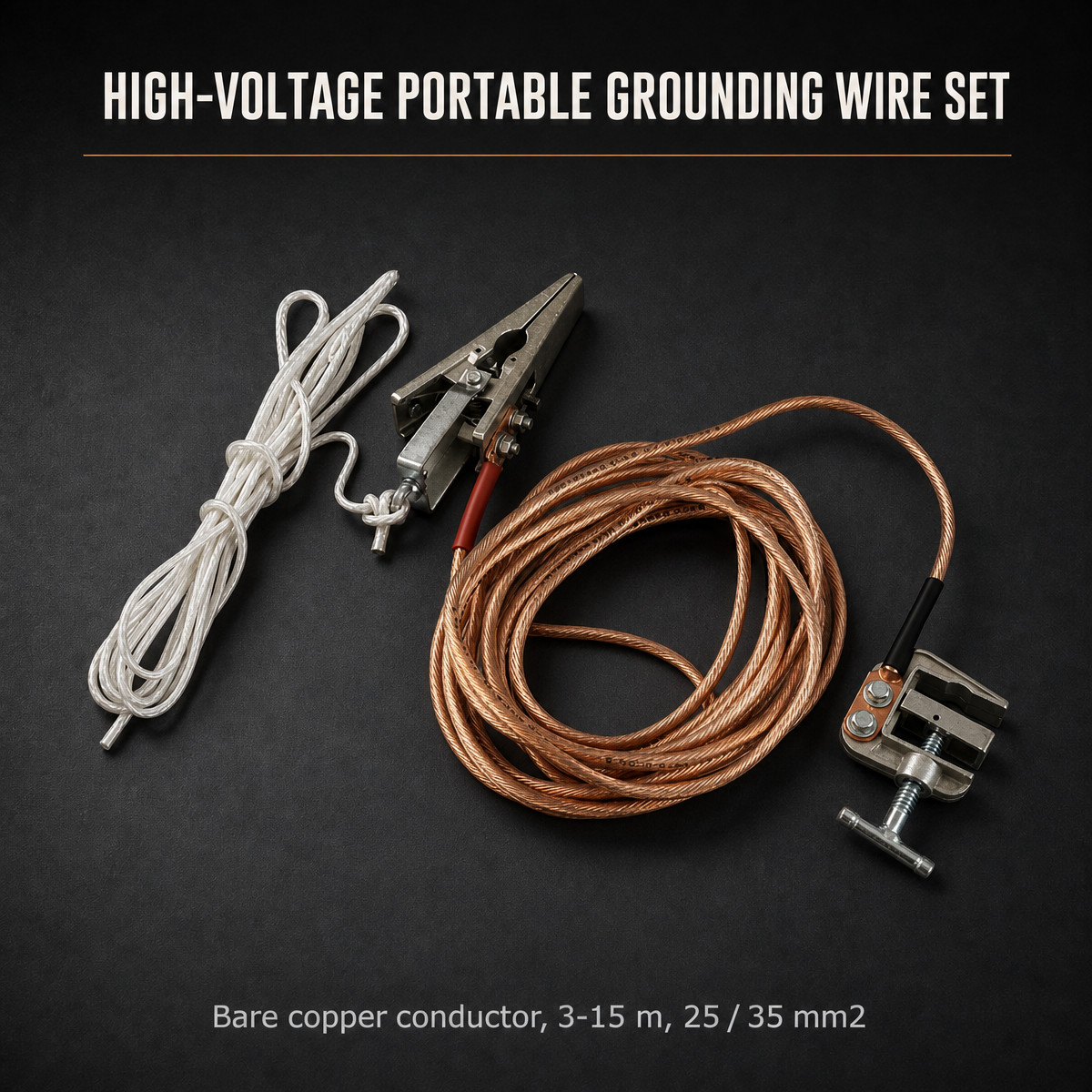
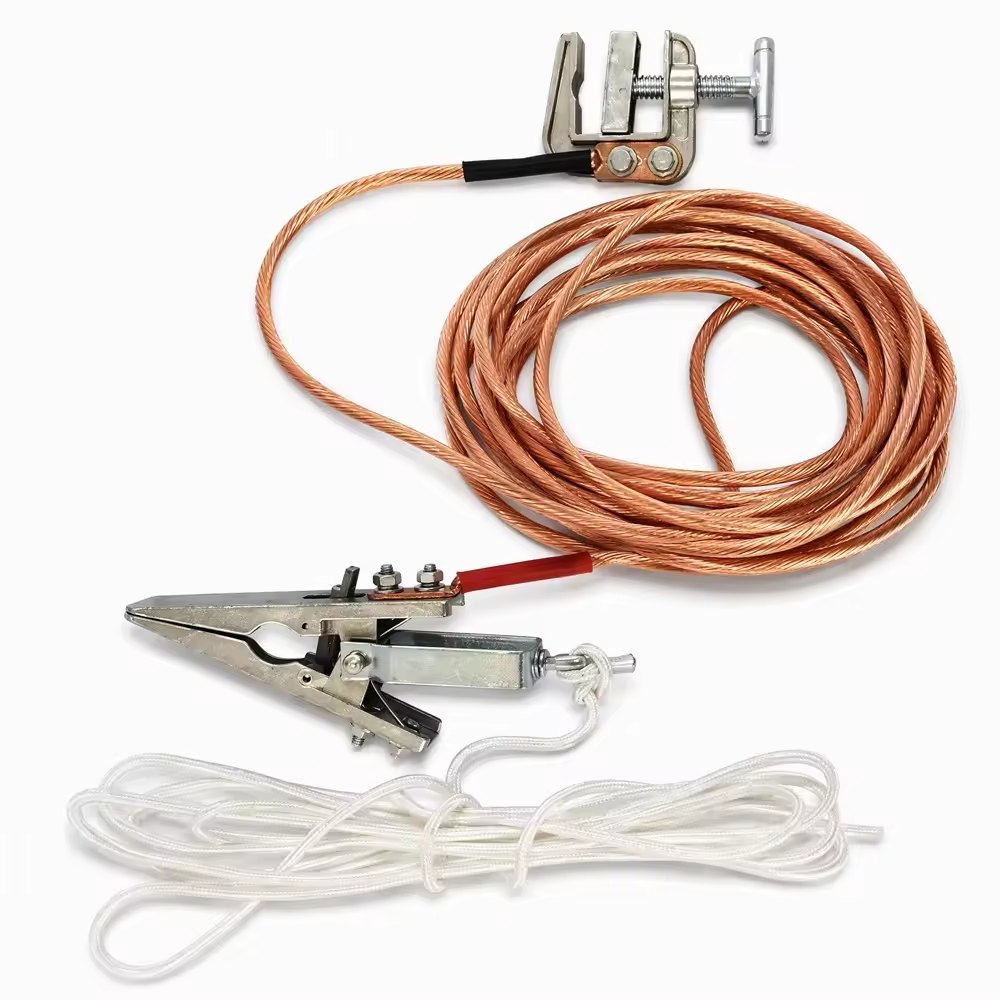
A set is only as good as the contact it makes, and in practice the clamp is picked by what sits at the point of work rather than by the voltage class. A flat-jaw screw clamp with a 35 mm jaw takes round bar, angle steel, flat bar and busbar edges; a duckbill clamp takes the end of a busbar or a terminal strip; a spiral clamp gives repeatable contact pressure on a circular conductor; an alligator clip is for test terminals and the low-voltage side; a gooseneck hook is what you use from the ground when the point to be grounded is overhead.
The jaw opening has to clear the thickness of the part it grips. When it does not, the answer is a different clamp — not a tighter grip on the wrong surface. This is the failure that survives every visual check, because a set that does not fit looks exactly like a set that does.
The range follows the arrangements we are asked for most: substation sets for 110 kV and 110 kV / 220 kV work with a clamp per phase and an earth clamp; a set with an earth rod covering 0.4 kV to 500 kV; a 10 kV cable set for distribution work; the 27.5 kV catenary set for railway overhead line; and personal safety grounding leads for the low-voltage case and for 35–1000 kV, where the lead travels to the individual rather than to the bay.
A set is applied from outside the danger zone, so the rod follows the height of the point to be grounded and the position the operator can stand in — not the voltage class alone. Our rods are built from 500 mm body sections; the three-section sets in the range reach 5.5 m, 6 m and 7.2 m, and the 110 kV arrangement is specified for a clearance height above 3 m.
Longer is not automatically safer. Every extra metre adds torque at the clamp end and drift in wind, so where the height is fixed the number of sections is the variable that decides how the rod travels, stores and assembles.
Five lines are enough to quote a set properly rather than approximately: the system voltage; the prospective fault current and the clearing time of the upstream protection; the conductor or structure the clamps have to grip; the height to reach and where the operator will stand; and how many sets and phases the job needs.
In the UK, most of Europe, India and anywhere the specification is written to IEC, the assembly is called an earthing kit or a portable earthing set. In the US and Canada the same assembly is a grounding set, and utility crews often call it a temporary protective ground. The equipment does not change with the word: IEC 61230 covers it under either name, and the clamps, leads and rod are the same parts.
That matters more than it sounds when you are searching or writing a purchase order. A requisition asking for "grounding sets" and a drawing labelled "portable earthing set" describe one thing, and a quotation that answers only one of the two vocabularies tends to look like it is answering a different question. Send whichever term is on your document — we match the set to the duty, not to the label.
Portable earthing and short-circuiting sets to IEC 61230 — 0.4 kV to 500 kV substation sets, 27.5 kV railway catenary sets and personal safety grounding leads, with clamps and insulating operating rods.

Three-phase portable short-circuit earthing set with epoxy operating rod, oxygen-free copper leads in 16 / 25 / 35 / 50 mm² and a screw-type aluminium clamp head, built for 0.4 kV to 500 kV.

Portable 3-phase short-circuit grounding device for 110 kV and 220 kV with earth wire set.

High-purity copper grounding kit, 50/70 mm² conductors, with operating rod.

Portable short-circuit grounding cable set with oxygen-free copper conductors for 10 kV distribution.

Portable 27.5 kV grounding set for railway high-voltage catenary work: three-section epoxy resin operating rod, high-purity bare copper conductor and a gooseneck hook that clamps onto the contact wire.

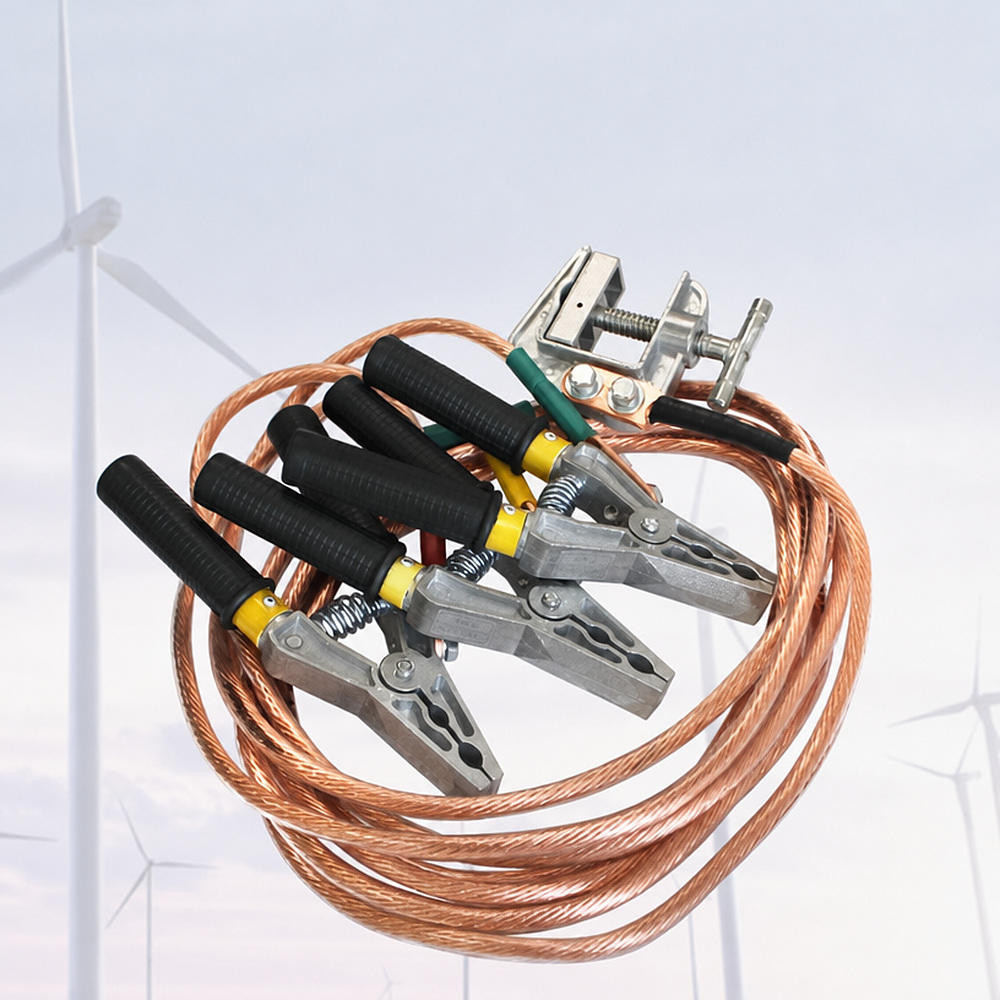
Portable personal-safety grounding lead with a PVC-insulated flexible copper conductor, insulated plier clamps and a ground clamp, sized for work on 0.4 kV distribution boards and 10 kV switchgear.

Copper personal-security earthing wire with a transparent sheath, supplied in matched voltage classes from 35 kV to 1000 kV so the lead, the cross-section and the voltage class always go together.

Portable short-circuit earthing wire set with a spiral clamp and an alligator clip, fine-stranded copper 25 / 35 mm², supplied in 3–15 m lengths for 35–1000 kV overhead line and substation work.
Two words for one object, and the wrong word is where enquiries go wrong. What IEC 61230 actually calls the equipment, why the rating is in amps and seconds rather than kilovolts, and the five lines that end the argument.
Read the guide Grounding & Earthing · 6 min readFive parts, one of which half the quotations leave out. What decides the conductor, the clamp and the rod, why personal grounding leads are a different product, and what to tick off when the crate lands.
Read the guide Grounding & Earthing · 8 min readThe first question most buyers ask about a portable earthing set — "what voltage is it?" — is the one the product standard does not answer. Under IEC 61230 the withstand capability is rated as current, time and peak factor, and voltage enters only through the insulating component and the geometry.
Read the guideSend us your specifications — insulating mats, gloves, voltage detectors, grounding systems or safety tooling projects. Our engineers respond within 24 hours with technical recommendations and pricing.