
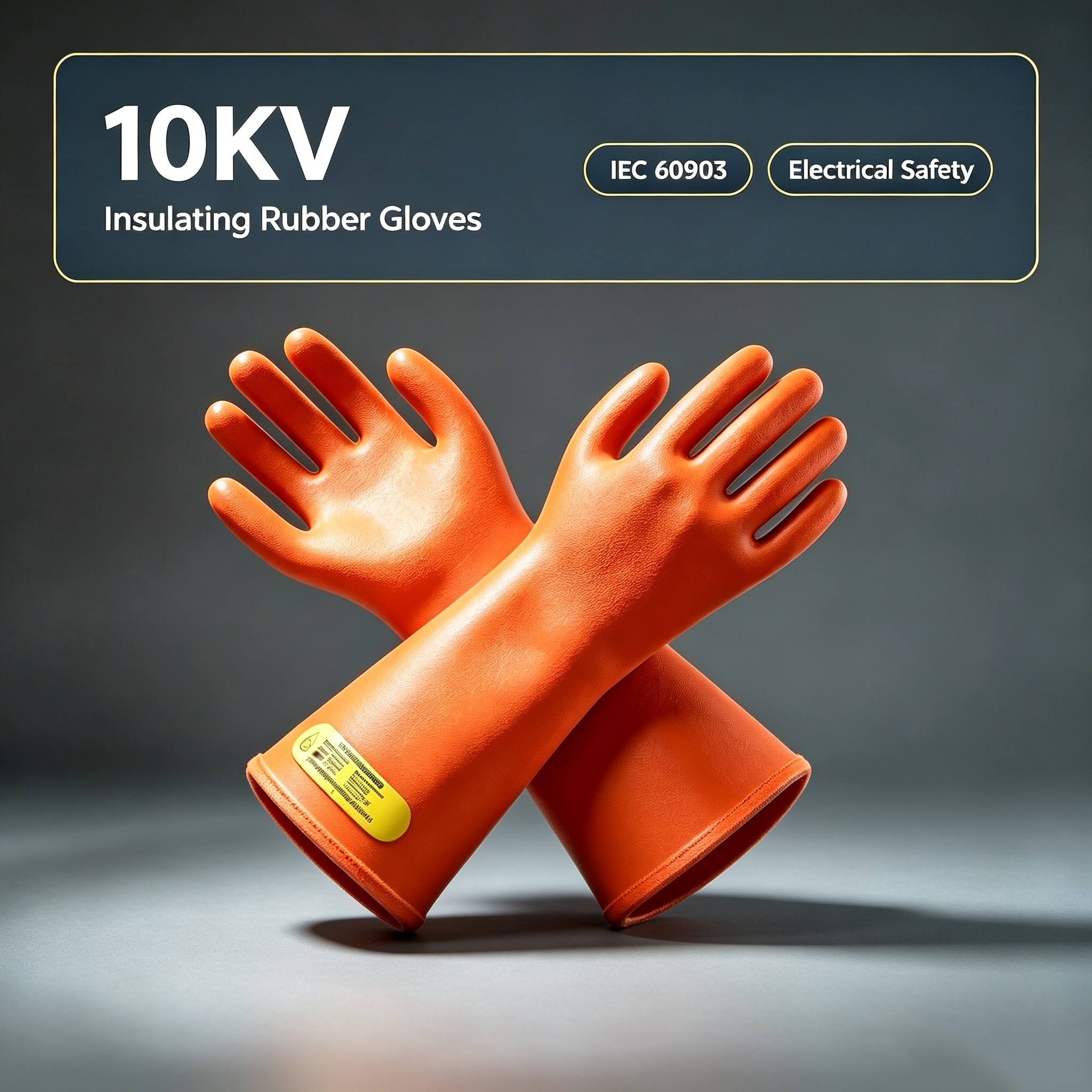
IEC 60903
Rubber Insulating Gloves 10 kV – 35 kV
Natural latex insulating gloves for substation and live-line electrical operations, 10–35 kV classes.
We manufacture insulating gloves to IEC 60903, insulated footwear to EN 50321-1 and high-voltage insulating suits for live-line and substation work. Every unit is tested before it leaves the factory, and the test certificate is supplied with the order.
A request for "a 20 kV glove" is a request for the wrong thing. On an insulating glove, 20,000 V is the AC proof test voltage; the maximum voltage that glove may be used on is 17,000 V AC. Buying on the proof test number under-specifies the class, because the proof test is the factory test and the maximum use voltage is the working limit.
Quotes and purchase orders that name only one of the two figures are the most common source of a wrong glove arriving on site. Name the class, and state the maximum use voltage you are working to.
IEC 60903 gloves carry category letters for the conditions they resist. If a glove is being used in an environment it is not categorised for, it is wearing out faster than its inspection interval assumes — and the degradation is usually visible before it is dangerous, which is why gloves are examined before every use.
Where an insulating glove is worn without leather protectors over it, the class goes up by one; Class 00 and Class 0 are the exception. Separately, a glove worn over a sleeve or a protector has to extend past it by a minimum distance, and that distance grows with the class — from 12 mm at the bottom of the range to 100 mm at Class 4.
Both rules exist for the same reason. If the protective system does not overlap, there is a path around the glove that its class says nothing about.
For Class 1 to 4 gloves, the interval that matters in service starts when the glove is issued, not when it was made, and it is 6 months. Separately, a glove still unissued 12 months after manufacture has to be re-tested before it goes out at all.
So a glove can sit inside its production-date validity and already be past its in-service re-test — which is how sets end up in use for months beyond the date on the register. Class 00 and Class 0 fall outside the routine dielectric re-test; that is not the same as requiring no checks, because they are examined and air-tested before use.
Natural latex insulating gloves, insulating boots and high-voltage insulating suits for live-line and substation operations, 10 kV to 35 kV classes.
Natural latex insulating gloves for substation and live-line electrical operations, 10–35 kV classes.
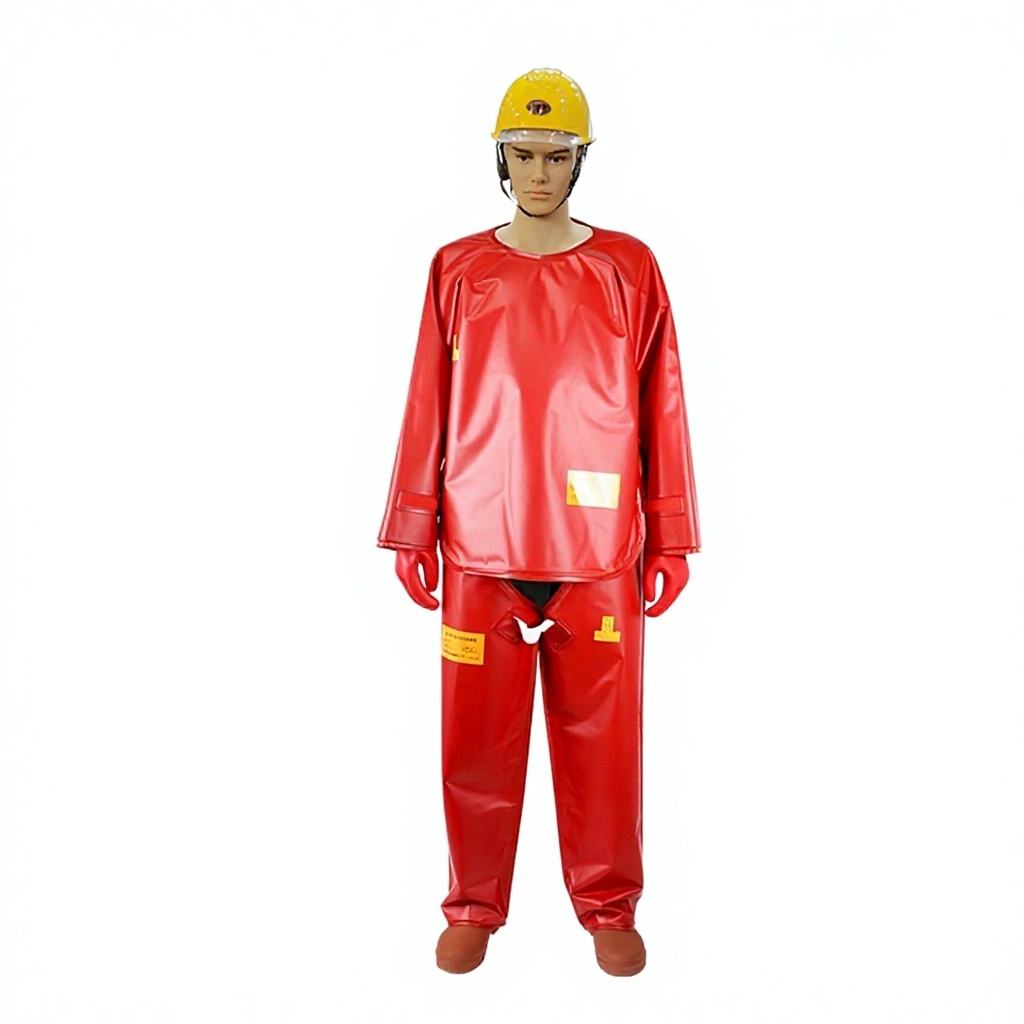
Class 4 high-voltage insulating suit for 35 kV live-line electrical work — full-body electrician protection suit.
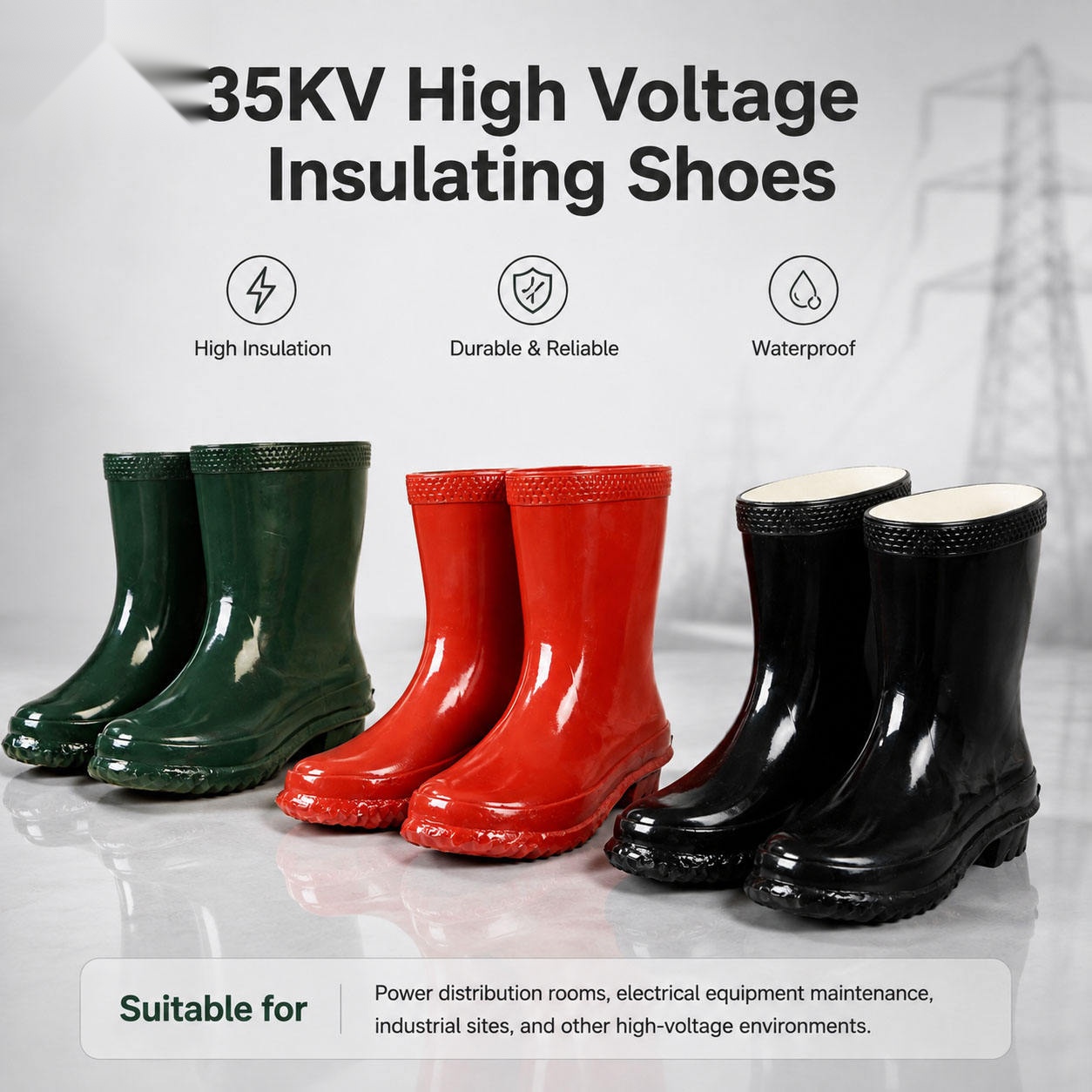
35 kV high-voltage insulated rubber boots with anti-vibration safety design for electric power construction.
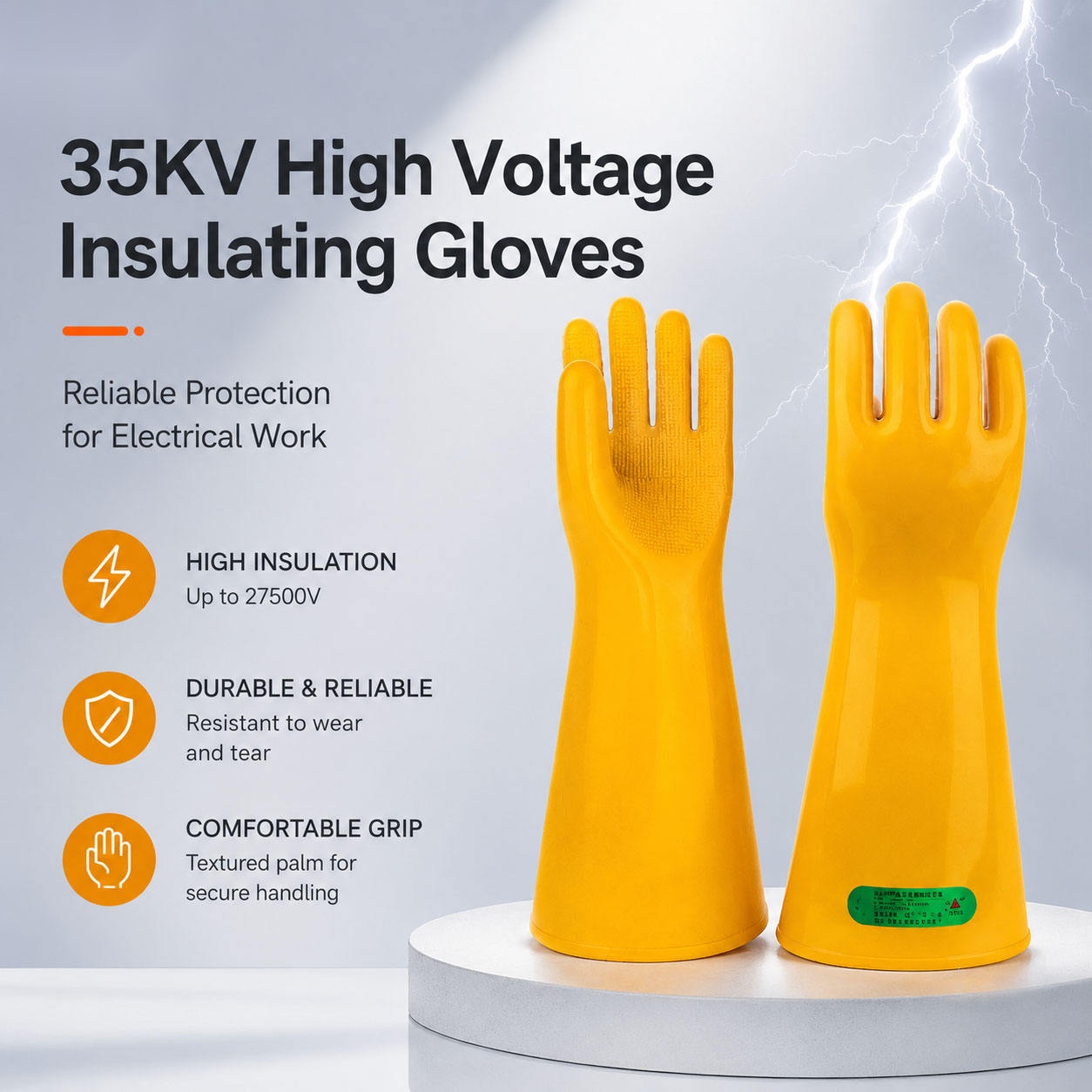
35 kV high-voltage insulating rubber gloves for electric shock protection in power construction and live-line operations.
Two clocks govern an insulating glove and they do not start together: a Class 1–4 glove is compliant for up to 12 months from the date of manufacture, and for 6 months from the date it is issued. This is what has to happen at storage, at issue, and at the six-month re-test — and why Class 00 and Class 0 are not simply exempt.
Read the guide Insulating Gloves · 6 min readEvery figure behind insulating glove selection in one place: the IEC 60903 Class 00–4 maximum use voltages and proof test levels, the colour convention, category letters, Type I versus Type II, and the storage and re-test rules once the gloves are in service.
Read the guideSend us your specifications — insulating mats, gloves, voltage detectors, grounding systems or safety tooling projects. Our engineers respond within 24 hours with technical recommendations and pricing.